
Scholarship of Teaching
2026 SoTL Grant Recipients
CTE awarded $13,200 across 9 projects
Monday, June 15, 2026
A record number of SoTL Grants were awarded for 2026-2027! Nine grants, totaling $13,200, were awarded to support faculty Scholarship of Teaching and Learning projects. This year's group includes two Collaboration Grants, two Research Grants, and five Dissemination Grants, with faculty from Arts & Sciences, Education, and Engineering. The funded projects range from exploring the role of AI in teaching and learning to investigating student wellbeing, metacognition, accessibility, inclusive pedagogy, language learning, and evidence-based strategies for supporting student success. Learn more about our grantees and the SoTL research happening here at UVA.
SoTL Collaboration Grants
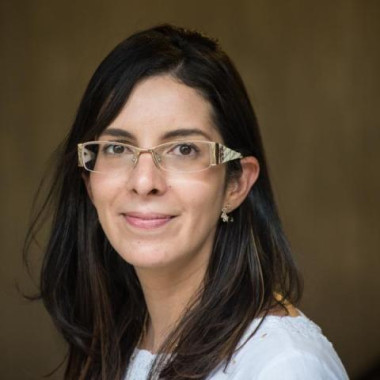

Mariana Teles and Hudson Golino, Psychology, College of Arts & Sciences
Grant Type: SoTL Collaboration Grant
Funding Awarded: $1,200
Project Title: Enhancing First-Year Student Learning Through a Cognitive Science–Based Intervention: Evaluation of the Learning Hub Program
Abstract: This project evaluates the effectiveness of the Learning Hub, a cognitive science–based intervention designed to improve first-year college students’ learning strategies and academic outcomes. Despite entering higher education, many students lack formal training in evidence-based learning techniques such as retrieval practice, structured note-taking, and metacognitive monitoring. The Learning Hub addresses this gap through a structured, small-group, in-person program led by trained undergraduate mentors. In this study, 80 first-year students will be recruited during the Fall semester and assigned to either an intervention group (n = 40) or a control group (n = 40). The intervention group will participate in the Learning Hub program, which consists of six sessions during the semester (1 hour and 15 minutes each), focused on applying cognitive science principles to real academic tasks. The control group will not participate in the intervention during the Fall but will be invited to participate in the Spring semester to ensure equitable access. Data will be collected pre- and post-intervention using validated measures of learning strategies, metacognitive awareness, and academic performance indicators. The study aims to assess whether participation in the Learning Hub leads to measurable improvements in students’ use of effective learning strategies and academic outcomes compared to a control condition. Findings from this project will contribute to the scholarship of teaching and learning by providing empirical evidence on scalable, theory-driven interventions that support student success in the transition to college.

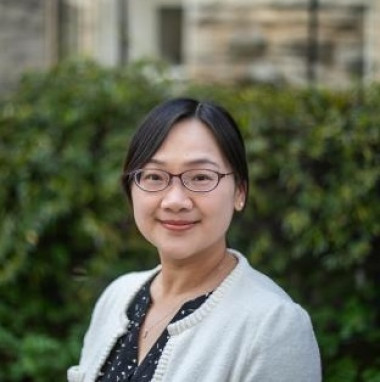
Elaine Yue and Ying Gao, East Asian Languages, Literatures & Cultures, College of Arts & Sciences
Funding Awarded: $1,500
Project Title: Exploring the Impact of AI-Assisted Pronunciation Training on Tone Acquisition in Beginning Chinese
Abstract: Beginning learners of Chinese often struggle with pronunciation, particularly the accurate production of tones, which are essential for meaning in Mandarin. Traditional classroom instruction provides limited time for individualized pronunciation practice and feedback, making tone acquisition especially challenging for novice learners. While recent research on artificial intelligence (AI) in language learning has largely focused on advanced-level language classrooms, less attention has been given to the potential role of AI tools in supporting beginning-level learners. This project aims to explore whether AI-supported pronunciation practice can assist novice Chinese learners in developing tonal accuracy and overall pronunciation.The project will investigate the use of AI language-learning tools, including Talkio.AI and Luduan, which provide guided pronunciation practice and automated feedback. Beginning-level Chinese students will engage in structured pronunciation practice using one or both of these AI platforms alongside regular classroom instruction. The study will examine how students interact with these tools and whether AI-assisted practice contributes to improvements in tonal accuracy over time. Data will be collected through students’ audio recordings, instructor evaluations of pronunciation, student self-evaluations, and written student reflections on their learning experiences.By analyzing these data, the project seeks to better understand how AI-supported pronunciation training may complement classroom instruction. The findings will help inform more effective pronunciation teaching strategies in beginning Chinese courses and contribute to broader discussions about integrating emerging technologies into early-stage language learning.
SoTL Research Grants
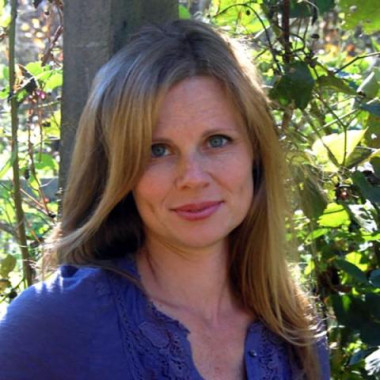
Erin Clabough, Psychology, College of Arts & Sciences
Funding Awarded: $3,000
Project Title: Staying Conscious: Long-Term Wellbeing Outcomes of a First-Year Consciousness
Abstract: Student wellbeing is one of the most pressing challenges in higher education today, and first-year students are particularly at risk. This project examines whether integrating contemplative practices into a required first-year course (such as nature immersion, sound, breathwork, yoga, and meditation) can meaningfully improve student wellbeing. Over three semesters, 171 students completed pre and post surveys measuring wellbeing, perceived stress, mindfulness, and mystical experience, covered by a longitudinal IRB approval. Comparison students were drawn from five other Scientific and Empirical Engagement courses at UVA. Preliminary data show that students in the consciousness-based course showed significant gains in their capacity for self-transcendent experience. This grant supports three things needed to support a full analysis and a published work: 1) completing the quantitative analysis of the full dataset, 2) collecting a qualitative exit survey from the original Winter 2023/24 student cohort now in their final year at UVA, using gift cards as an incentive to boost students responses to a survey from a class they took two years ago, and 3) writing the manuscript. AI-assisted thematic coding, a technique the Principal Investigator has used previously on student feedback data, can be applied to the open-ended interview responses, and an undergraduate Research Coordinator will provide organizational support. The outcome will be a peer-reviewed mixed-methods publication that helps other educators understand what this kind of course can do for students and why it is important.
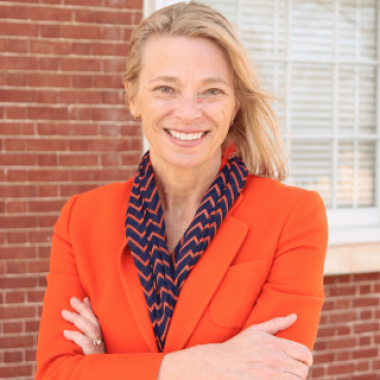
Lysandra Cook, Curriculum, Instruction & Special Education, School of Education & Human Development
Funding Awarded: $3,000
Project Title: Voicing Inclusion: Expanding PhotoVoice Methodology Through Structured Community Partnerships in an Undergraduate Disability Studies Course
Abstract: This project investigates how structured PhotoVoice partnerships with disability-focused community organizations shape undergraduate students' understandings of inclusion, disability identity, and community belonging. Set in EDIS 2021: Inclusion in Schools and Community at UVA's Curry School of Education and Human Development, the study extends prior PhotoVoice work conducted in a related course (EDIS 2020) through a 2023 CTE Thrive Grant, now expanding to three Charlottesville-area partner organizations: Innisfree Village, Kindness Café Charlottesville, and The Arc Studio (ARC of the Piedmont).Students will complete semester-long PhotoVoice projects alongside disabled community members, culminating in co-created public exhibitions. A distinctive feature of this design is the intentional separation of course delivery from research observation: a disabled adjunct instructor assumes primary instructional responsibilities, while the Principal Investigator serves as embedded researcher and community liaison — a model that both addresses well-documented positionality challenges in SoTL and centers disability expertise in the course's pedagogical core.Using mixed methods — pre/post surveys, reflective writing, focus group interviews, and analysis of student PhotoVoice artifacts — the study examines shifts in students' attitudes toward disability and community inclusion. Findings will contribute to SoTL literature on participatory methodologies in teacher preparation, disability studies pedagogy, and university–community partnership models. Results will be submitted to the International Society for the Scholarship of Teaching and Learning (ISSoTL) and pursued for publication in a peer-reviewed journal.
SoTL Dissemination Grants

Liza Flood, Engagements Program, College of Arts & Sciences
Funding Awarded: $1,000
Project Title: Learning Through Commonplacing: Engaging Gen Z in an Ancient Practice at the University of Virginia
Abstract: This grant proposal seeks summer funding for the dissemination of findings from a SoTL grant I am finalizing with colleagues this academic year via publication in a scholarly journal. In the project, “Qualitative Analysis of the Efficacy of the Engagements’ Commonplace Book,” we gathered data from faculty and students about their experiences using commonplace books as a pedagogical tool for first-year coursework at UVa. Approximately 3000 students and more than 100 faculty are currently using the books. Through student surveys and faculty interviews, we are examining the opportunities and challenges of commonplace books as an AI-resistant screen-free learning strategy that helps students internalize, organize, and retain course content, often in collaboration with others. I would like to detail this program initiative and an analysis of the data we collected in a journal article to be submitted to Active Learning in Higher Education. This would be an opportunity to share the fundamentals of “commonplacing” with other institutions. In a presentation I gave at the AACU national conference this winter, I gained a sense of the appetite people have for not only the conceptual aspects of innovative pedagogies, but also the nuts and bolts: how can I do this at my school? What obstacles exist and how can I overcome them? I can offer concrete insights to a national/international audience about how students and faculty at UVa have engaged commonplacing with significant success.
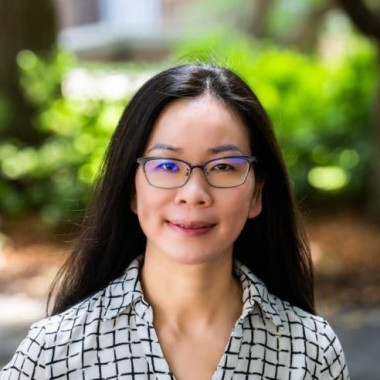
Meiqin Li, Applied Mathematics, School of Engineering & Applied Science
Funding Awarded: $1,000
Project Title: The Reliability of Online Un-proctored Precalculus Placement Test for Calculus Courses
Abstract: Accurate placement into college level mathematics courses is essential for student success and retention, as misplacement can lead to academic difficulties, reduced confidence, and increased attrition. As institutions increasingly rely on un-proctored online placement tests to assign students to mathematics courses, concerns have emerged regarding whether these assessments reliably reflect students’ mathematical readiness—particularly in high stakes STEM contexts. While mathematics placement testing has been widely studied, prior research has focused primarily on test design and predictive validity, leaving the reliability of un-proctored online formats comparatively underexamined.This study addresses that gap by directly comparing overall and topic specific performance on two highly aligned precalculus placement assessments: an online un-proctored placement test and an in-person proctored assessment completed by the same students. Drawing on data from approximately 1,000 incoming engineering students, we examine the consistency of placement scores across testing modalities, identify domain specific discrepancies across precalculus topics, and analyze variation by prior preparation. Student perceptions of assessment accuracy and fairness are also incorporated through surveys and interviews. Using a mixed method approach, quantitative data were analyzed with multiple statistical techniques, while qualitative data were examined using a deductive analytic framework. Results indicate that un-proctored online placement tests do not consistently measure precalculus readiness, with substantial variation across mathematical domains—particularly in algebraic and symbolic skills. These findings underscore the need for more robust, reliable, and equitable mathematics placement practices and provide evidence-based guidance for institutions that rely on un-proctored assessments for calculus placement. The findings also have broad relevance for institutions that rely on online placement testing and seek to balance efficiency with instructional integrity, equity, and student success, especially for STEM subjects.
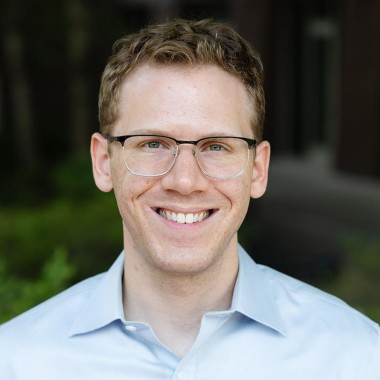
Matthew McMillan, Applied Mathematics, School of Engineering & Applied Science
Funding Awarded: $1,000
Project Title: Enabling Digital Accessibility in Math Courseware
Abstract: Large public universities must meet federal digital accessibility standards under Title II of the ADA by April 2026. For mathematics instructors, compliance requires that formulas and equations in course materials be parsable by screen readers, which conventional LaTeX-to-PDF workflows cannot achieve. The recognized solution is Mathematical Markup Language (MathML) embedded in HTML, but instructor adoption remains very low due to a lack of efficient tools and workflows.The PI and one undergraduate computer science major developed a free system of tools and workflows to generate, manage, and offer courseware in MathML for two UVA courses, APMA 1110 and APMA 3100. The system uses Obsidian for authoring and management, Git for collaboration and versioning, Quartz for generating the static HTML pages, and Cloudflare for free hosting with content privacy controls. System setup time is estimated at 1-2 hours, following our tutorial, for instructors with moderate computer literacy. Once set up, the edit-to-publish cycle runs just a few minutes, updating the site in the cloud upon a single command.An empirical study of 31 sections of Calculus II over six semesters found that sections using this system substantially outperformed control sections, with treatment sections reaching 2.4 standard deviations above the control mean in the final semester. A student experience survey showed no statistically significant difference between groups. This dissemination grant will support presenting these results at the ASEE conference and advancing the next phase of the project: studying barriers to adoption of the system by instructors at other institutions.

Jelena Samonina, Chemistry, College of Arts & Sciences
Funding Awarded: $1,000
Project Title: Reimagining Discussions to Ignite Engagement and Boost Performance in a Large-Enrollment Organic Chemistry Class
Abstract: Organic chemistry is often perceived as a daunting course, particularly by pre-health students, and this challenge is amplified in large-enrollment settings. Many students equate studying with time spent rather than evidence of learning, leading to inefficient exam preparation and limited transfer of problem-solving strategies. To address this, we redesigned a large-enrollment organic chemistry course to incorporate brief instruction on metacognition and a structured metacognitive cycle of planning, monitoring, and evaluation across multiple exam units.One week before each exam, students completed a low-stakes mock exam, reflected on their performance, and developed a targeted study plan. After the exam, they submitted a study report evaluating how they prepared, how effective their strategies were, and what they would change for the next cycle. Metacognitive growth and course experience were assessed through surveys administered at the beginning, middle, and end of the semester, including the Metacognitive Awareness Inventory, along with student-generated artifacts and exam performance. Preliminary results indicate changes in students’ metacognitive knowledge and regulation across the semester. Students reported shifting from passive review toward more intentional, evidence-based study practices, including retrieval practice and targeted error correction. They also described a change in their perception of organic chemistry from intimidating to challenging, rewarding, and manageable. These findings suggest that embedding structured metacognitive supports into large-enrollment organic chemistry can strengthen self-regulated learning without reducing content coverage and provides a scalable model for supporting student success in demanding chemistry courses.
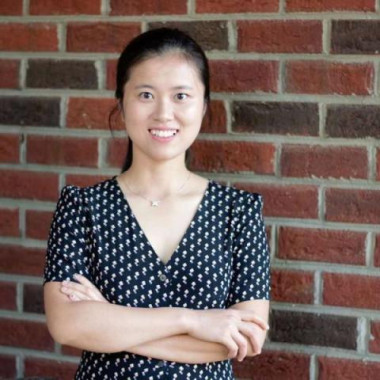
Cynthia Tong, Psychology, College of Arts & Sciences
Funding Awarded: $500
Project Title: AI in Classroom Learning: Evidence and Dissemination from a Longitudinal Study
Abstract: Artificial intelligence (AI) is rapidly entering undergraduate education, offering potential benefits such as personalized feedback and enhanced learning support. Meanwhile, educators have raised concerns about overreliance on AI and its implications for student learning and academic integrity. Despite growing interest, most existing research relies on surveys, interviews, or observational studies. Experimental evidence on the impact of AI in real classroom settings remains limited. This study experimentally evaluates how AI usage influences student learning and classroom experiences. The study is conducted in two parallel sessions of an Engagement Course, each enrolling approximately 35 students randomly pre-assigned to the sessions. One session serves as the experimental group, where students are encouraged to use AI to discuss course materials during designated class time and complete learning activities. The other session serves as the control group, where students discuss course materials only with their classmates. This design enables comparisons between classrooms with different AI policies. Longitudinal data are collected from students’ weekly reflective journals, surveys on AI usage, and course evaluations. At least two independent raters will evaluate student work, with inter-rater reliability assessed. Mixed-effects models will be used to analyze the hierarchical longitudinal data. Additional qualitative data from student surveys and instructors’ reflections will provide further insights into AI’s impact. Findings from this study will contribute empirical evidence to ongoing discussions about the role of AI in higher education and inform future classroom policies and teaching practices.
See our full list of SoTL Grant recipients.